



Basketball Rules Explained Simply (For Beginners)
If you are new to basketball, the game can look fast and confusing at first. Players move quickly, referees blow whistles, and the ball changes hands constantly.
The good news is that basketball rules are simple once they are explained clearly.
This guide explains the basic rules of basketball in plain language, helping beginners, kids, parents, and first-time players understand and enjoy the game with confidence.
What Is Basketball and How Is It Played?
Basketball is a team sport played between two teams that try to score points by throwing a ball into a hoop. Each team works together to score while stopping the other team from scoring.
The game is played on a rectangular court with a hoop at each end. Players move the ball by dribbling or passing, and points are awarded when the ball goes through the hoop.
How Many Players Are on the Court?
Players on Each Team
Each team has five players on the court at one time. Teams usually have extra players on the bench who can be substituted during breaks in play.
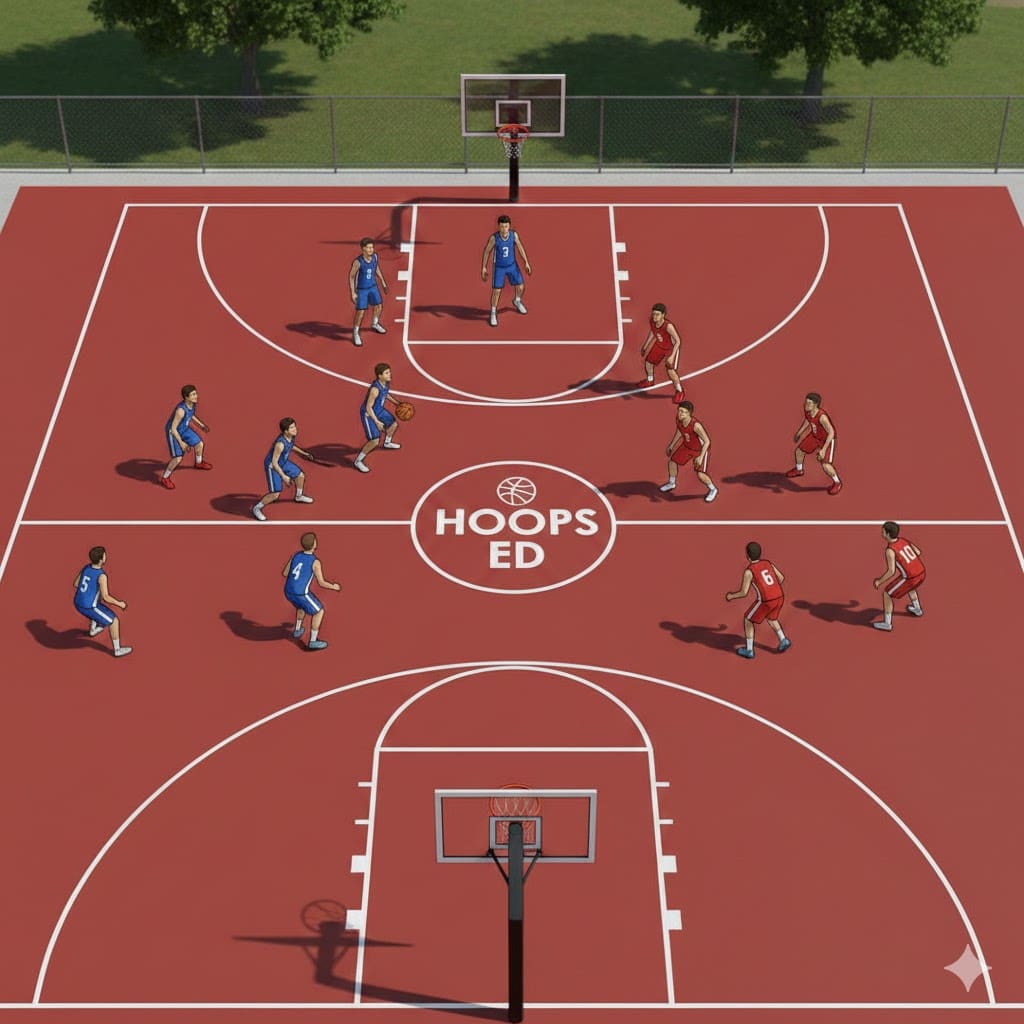
For beginners, positions are not important in the early stages. Learning how to move, pass, dribble, and shoot matters much more than knowing specific roles.
Understanding the Basketball Court and Equipment
The Basketball Court
A basketball court has marked lines that guide the game, such as the centre circle, three-point line, and free-throw line. Beginners do not need to memorise every marking straight away, but understanding the court boundaries is essential.
The Hoop and the Basketball
In standard games, the hoop is 3.05 metres (10 feet) high. For juniors and beginners, lower hoop heights are often used to make learning easier.
Using the correct basketball size also helps beginners control the ball better and develop proper technique.
How Scoring Works in Basketball
Scoring in basketball is simple. When the ball goes through the hoop, points are awarded depending on where the shot was taken.
A shot taken inside the three-point line scores two points, while a shot taken from behind the three-point line scores three points.
Free throws, which are awarded after certain fouls, are worth one point each.
How Long Does a Basketball Game Last?
Most games in Australia follow FIBA rules. A game is divided into four quarters, each lasting 10 minutes. There are short breaks between quarters and a longer break at half-time.
If the game is tied at the end of regular time, extra time, known as overtime, is played until a winner is decided.
The Most Important Basketball Rules Beginners Should Know
Dribbling the Ball
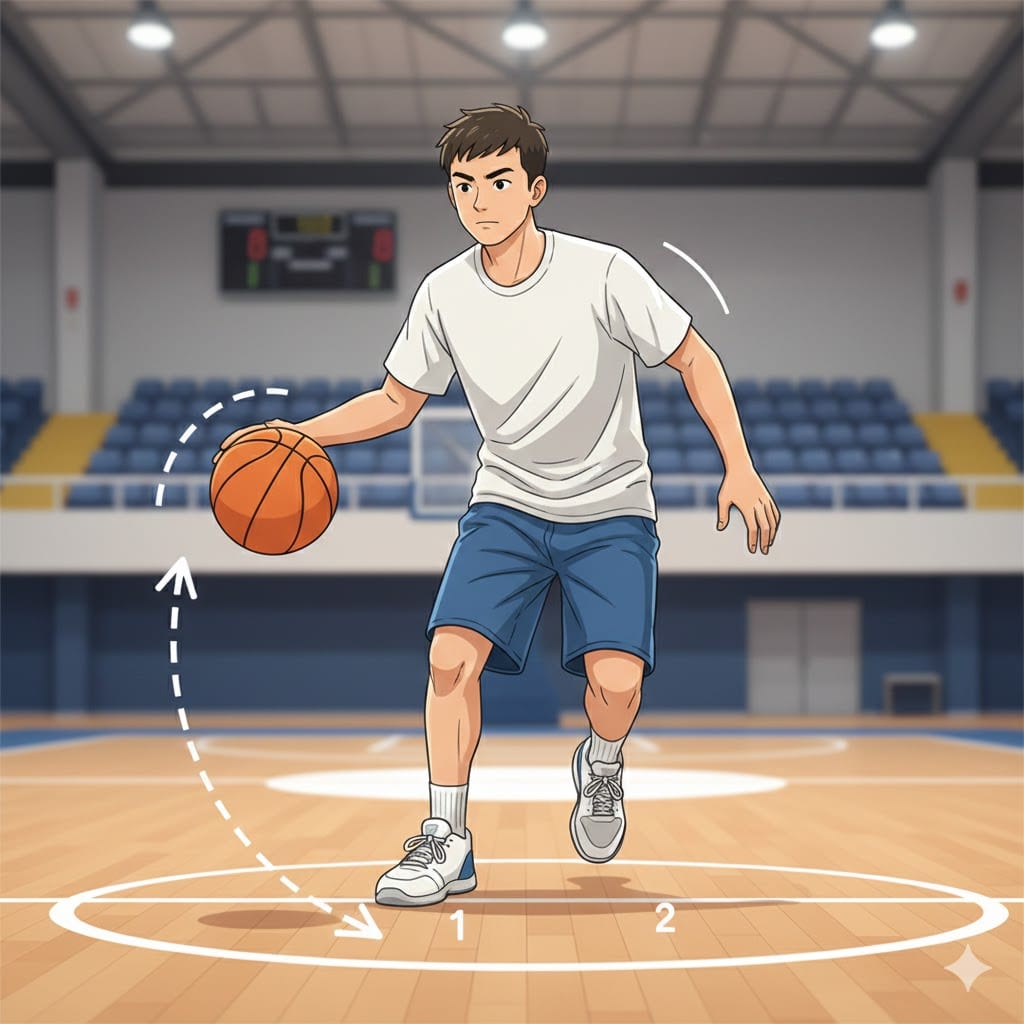
Players must dribble the ball to move around the court. Dribbling means bouncing the ball with one hand while moving. Running while holding the ball without dribbling is not allowed.
Travelling
Travelling occurs when a player takes too many steps without dribbling. This is one of the most common beginner mistakes and improves naturally with practice.
Double Dribble
Once a player stops dribbling, they must pass or shoot the ball. Starting to dribble again after stopping is called a double dribble and is not allowed.
Out of Bounds
The ball is considered out of bounds if it touches the boundary lines or goes outside the court. When this happens, the other team gains possession of the ball.
Fouls Explained in Simple Terms
A foul happens when a player makes illegal physical contact with another player. Basketball allows some contact, but pushing, holding, or hitting another player’s arms is not permitted.
When a foul occurs, play stops and the referee decides the outcome, which may include free throws or a change of possession.
What Are Free Throws?
Free throws are an important part of basketball, giving a player the chance to score points without any defenders blocking their shot. They are usually awarded when a player is fouled while shooting or when the opposing team has committed a certain number of team fouls.

Free throws are taken from the free-throw line, which is 4.57 metres (15 feet) from the hoop. Each successful free throw is worth one point, and the player gets a chance to score without the pressure of defenders.
Other players must remain outside the key (the rectangle under the basket) until the shot is released. This rule ensures that the shooter has space and a fair opportunity to score. Free throws may seem easy, but they require focus, proper shooting technique, and a calm mind — which is why practicing them is a key part of improving as a beginner.
Tip for beginners:
Visualise the hoop, maintain a balanced stance, and use a smooth, consistent motion. Practising free throws regularly will improve your confidence in games, especially during tight matches where every point counts.
Violations vs Fouls (Easy Way to Understand the Difference)
In basketball, beginners often confuse violations with fouls. Understanding the difference helps you play with confidence, follow the rules correctly, and avoid unnecessary turnovers or penalties.

Here’s a simple comparison:
|
Aspect |
Violation |
Foul |
|
Definition |
Breaking a rule without physical contact |
Illegal physical contact with another player |
|
Examples |
Travelling (taking too many steps without dribbling), Double dribble, 24-second shot clock violation |
Pushing, Holding, Blocking unfairly, Hitting a shooter’s arm |
|
Result |
Ball is given to the opposing team |
Fouled player may get free throws or the other team gains possession |
|
Penalty Severity |
Minor, usually just loss of possession |
More serious it can lead to free throws and personal foul counts |
|
Beginners Tip |
Focus on controlling the ball and following basic rules |
Play carefully and avoid unnecessary contact with opponents |
Why this matters for beginners:
Knowing the difference helps you play safely and strategically, reduces frustration, and allows you to focus on improving skills instead of worrying about breaking rules.
Common Mistakes Beginners Make (And Why They’re Normal)
When beginners start playing basketball, mistakes are not only expected, they are an essential part of learning the game. Many new players forget to dribble when they move, rush their shots because they feel pressured, or hesitate because they are unsure what to do next. These mistakes usually happen because beginners are still learning how to coordinate their movements, understand the flow of the game, and apply the rules at the same time.
Basketball requires players to think, move, and react quickly. For someone new to the sport, this can feel overwhelming at first. Making mistakes does not mean you are bad at basketball; it simply means your brain and body are still adjusting to the game. With regular play and repetition, these mistakes naturally reduce as confidence and understanding grow.
Simple Tips to Improve as a Beginner
Improving at basketball does not require advanced skills or complex techniques. For beginners, steady progress comes from practising the basics consistently and building confidence through regular play. Focusing on simple habits early makes the game feel easier and more enjoyable over time.
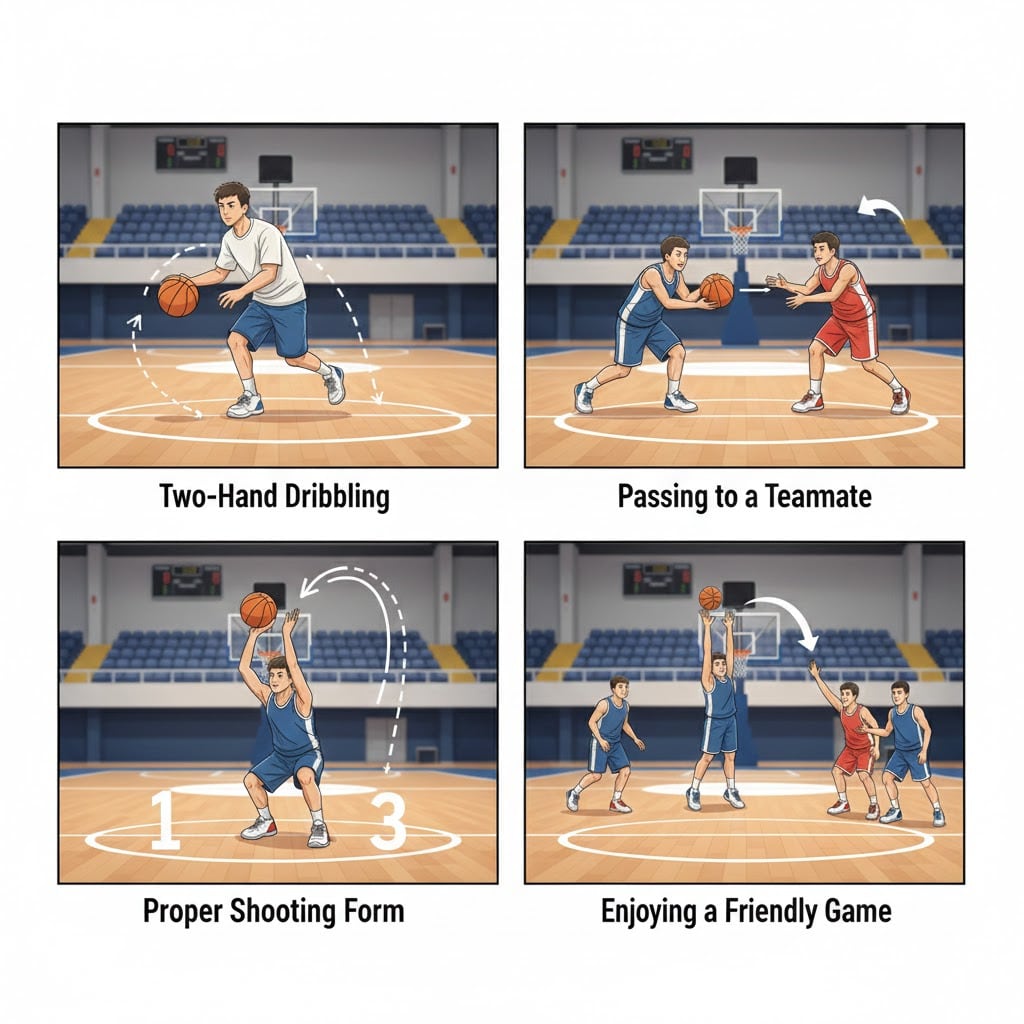
Beginner tips to improve your basketball skills:
- Practise dribbling with both hands to improve control and balance
- Focus on correct shooting form rather than shooting quickly
- Make simple passes and look for open teammates
- Play regularly in a relaxed, friendly environment
- Don’t be afraid to make mistakes because learning comes from experience
- Warm up before playing to avoid injuries and move more comfortably
Why Understanding Basketball Rules Is Important
Understanding basketball rules gives beginners confidence and clarity on the court. When players know what is allowed and what is not, they can focus more on playing the game instead of worrying about making mistakes. This leads to smoother gameplay, fewer stoppages, and a more enjoyable experience for everyone involved.
Knowing the rules also improves teamwork. Players who understand basic rules such as dribbling, fouls, and out-of-bounds can communicate better with teammates and make quicker decisions. Over time, this understanding helps beginners feel more comfortable, play more confidently, and enjoy both playing and watching basketball.
Final Thoughts
Basketball is a fun, fast-paced sport that anyone can learn. By understanding these basic basketball rules, beginners can play with confidence, improve faster, and enjoy the game from the very first session.
Frequently Asked Questions About Basketball Rules
How do you start a basketball game?
A basketball game usually starts with a jump ball at centre court. The referee throws the ball into the air, and one player from each team tries to tap it to a teammate.
Can you take steps without dribbling in basketball?
Players are allowed a small number of steps when they catch the ball, but taking too many steps without dribbling is called travelling and is not allowed.
What happens if a player keeps fouling?
If a player commits too many personal fouls, they may be removed from the game depending on the competition rules. This encourages fair and safe play.
Is basketball safe for beginners and kids?
Yes, basketball is generally safe for beginners and children when the correct equipment is used, proper warm-ups are done, and the rules are followed.
What is the easiest way for beginners to learn basketball rules?
The easiest way to learn basketball rules is by playing regularly, watching games, and focusing on the basic rules first rather than trying to learn everything at once.